top of page


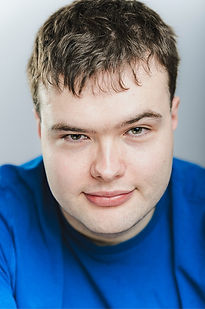

Working with Aaron on Faithfully yours Mozart was the highlight of my ten year career as a director, and what I would say to anyone looking to cast him in their productions, be it Audio, stage, film, or television, Aaron is a strong and passionate actor who makes incredible character choices; most especially when he is given the right support and the proper tools to assist him with delivering his all in light of the given material.
To say that Faithfully yours was a challenging script and project is an understatement, Aaron was stepping into a role that very few were taking seriously, however, once approached for the role by me personally, he took it head on and showed that this role was meant for him and I am most proud he gave Wolfgang's story the voice it needed and the passion it required with his acting.
However, in the early days of the project, observing Aaron in the booth at first seemed to produce mixed results and something was off about a particular sequence, to which I approached Aaron with the words "what are you thinking?"
This was not meant in the manner of questioning his choices; but rather trying to understand the disconnect I was sensing from his line delivery. Cut to several conversations later and candid ones which revealed there was an emotional disconnect Aaron had been having with just about every script he ever read for.
Of course, he would eventually get it through repetition and various tools of connecting but the landscape of Faithfully yours and the indie acting scene here was a much different field than the others.
Rather than give up and throw the towel in as I believe most would have, and in truth because I saw the potential in Aaron, there was an untapped spark in my opinion; through teamwork and collaboration with him, a tool using color theory was developed for the script. Following Aaron's revelation that the word "Grey" seemed to give him the understanding that a sequence in the script was meant to convey a heavy sadness, a color coding system was devised to coordinate the emotions of the page to the corresponding scene he was or would be performing. With this system in place, Aaron found he was able to connect more easily to not only Wolfgang but to all the characters in the sequences he was reading.
For Aaron as an actor, when given not only emotional cues and the system developed by me in tandem with his personal input; Aaron's phenomenal acting skills shone brightest and I witnessed a major shift in his performances. Once the proper tools and accessibility regarding his needs are met, his potential in the acting scene is unlimited and he is, in my opinion as his director, a strong actor when those accessibility tools are granted to him to perform in the way that makes the most sense to his brain and accommodates his needs. Be it bolded letters, or a dyslexic friendly font, or a color coded system to help him associate the proper emotional tone, As a director who worked with him for three years, I highly recommend more creatives take a chance on implementing such tools for not only Aaron but for any and all performers who are neurodiverse. In the long run, when Neurodiverse actors are given the best chance to succeed through patience and accommodation, the results are phenomenal and will leave your jaw hitting the floor. You will be speechless as they soar and this is why accessibility matters in the arts for actors like Aaron and those like him.
-Faith Jacobs, director of Faithfully Yours Mozart: The Courtship
A Director's Perspective: Accessibility matters
bottom of page